read and react offense pdf
Read and React Offense: A Comprehensive Guide
Due to current resource limitations, accessing detailed PDF guides is temporarily unavailable; please revisit later for comprehensive coaching development materials.
What is the Read and React Offense?
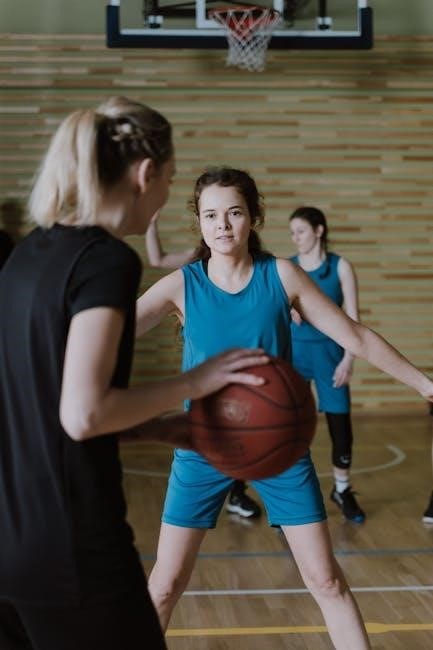
Currently, comprehensive resources detailing the Read and React offense are experiencing access issues, mirroring a temporary website overload. This offensive philosophy prioritizes player decision-making based on real-time defensive responses, rather than rigid, pre-set plays.
Essentially, players are taught to ‘read’ the defense – identifying how opponents react to their movements and passes – and then ‘react’ accordingly with appropriate cuts, passes, or shots. While detailed PDF guides explaining this system are presently unavailable due to resource constraints, the core concept revolves around empowering players to think and adapt on the court.
Understanding this dynamic interplay is crucial, though accessing in-depth written materials is presently limited.
Core Principles of Read and React
Unfortunately, detailed PDF documentation outlining the core principles is temporarily inaccessible due to ongoing resource limitations. However, the Read and React offense fundamentally centers on spacing, player movement, and continuous decision-making.
Key tenets include reading defensive positioning, exploiting gaps, and reacting to help rotations with intelligent passes and cuts. Emphasis is placed on unselfish play, ball movement, and creating advantageous scoring opportunities through player interaction. While comprehensive guides are currently unavailable, the system thrives on adaptability and minimizing reliance on scripted plays.

Players must understand timing, angles, and the importance of reacting to defensive adjustments – concepts presently difficult to fully convey without accessible resources.
Historical Development & Influences
Regrettably, accessing PDF resources detailing the historical evolution of the Read and React offense is currently restricted due to resource constraints. However, the system’s roots trace back to principles championed by coaches emphasizing player freedom and decision-making.
Influences include early motion offense concepts and a shift away from rigid, pre-determined play calls. Coaches sought to empower players to react instinctively to defensive pressure, fostering a more dynamic and unpredictable attack. The system gained traction as a response to increasingly athletic and versatile defenses.
Further historical context and detailed lineage are presently unavailable, pending restoration of access to relevant PDF documentation.
Key Components & Player Roles
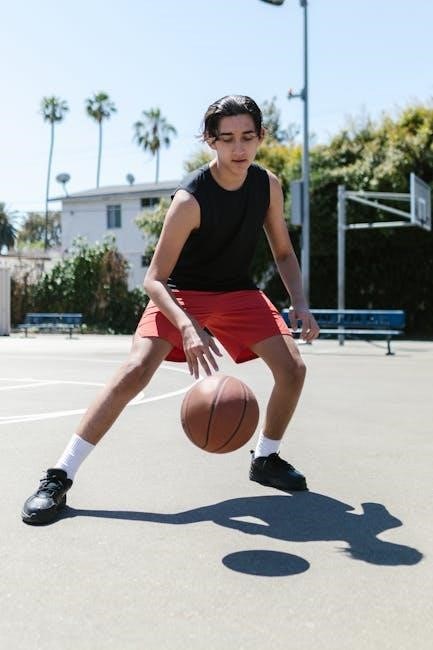
Currently, PDF access is limited; detailed role breakdowns are unavailable, hindering comprehensive understanding of player responsibilities within the system.
Point Guard Responsibilities
Unfortunately, due to the present resource constraints, a detailed PDF outlining point guard duties within the Read and React offense is inaccessible. Typically, the point guard initiates the offense, reading the defense and making quick decisions. They must possess exceptional court vision, passing accuracy, and a high basketball IQ to effectively lead the team.
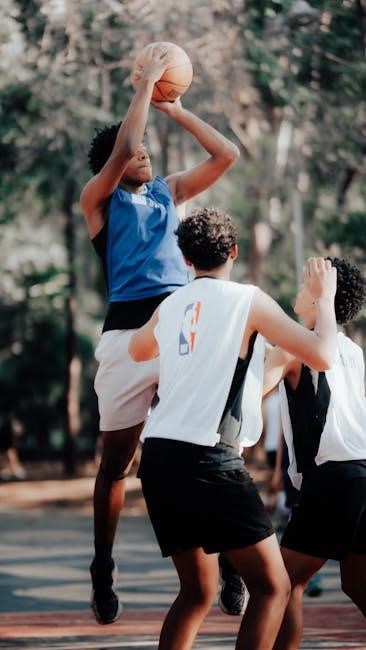
Without the PDF resource, specific drills and tactical nuances remain unavailable. However, generally, the point guard’s responsibilities include controlling tempo, recognizing mismatches, and exploiting defensive weaknesses. They are crucial in triggering offensive actions based on defensive reactions, ensuring fluid ball movement and creating scoring opportunities for teammates. Access to the PDF would normally provide a comprehensive breakdown of these skills.
Wing Player Actions
Regrettably, the currently unavailable PDF resource prevents a detailed explanation of wing player actions in the Read and React offense. Generally, wings are pivotal in spacing the floor, providing perimeter shooting threats, and executing cuts based on defensive reads. They must be versatile, capable of both driving to the basket and spotting up for open shots.
Without the PDF, specific cutting patterns and screening techniques remain undefined. However, wings typically react to defensive pressure by relocating, creating passing lanes, and exploiting gaps. Their ability to read help defenders and make quick decisions is crucial for offensive success. A comprehensive PDF would normally detail these actions, including specific drills for skill development and tactical understanding.
Post Player Involvement
Unfortunately, the current resource limitations, specifically the inaccessible PDF, hinder a thorough discussion of post player roles within the Read and React system. Typically, post players serve as focal points for entry passes, creating scoring opportunities through post-ups and drop-off passes. They also contribute by setting screens, rolling to the basket, and establishing position for offensive rebounds.
Without the PDF’s detailed guidance, outlining specific post movements and reads becomes challenging. However, post players must react to defensive pressure by making quick decisions – passing, shooting, or continuing to drive. Their ability to read help rotations and exploit mismatches is vital. A complete PDF resource would normally illustrate these concepts with diagrams and drills.

The “Read” – Recognizing Defensive Reactions
Regrettably, the resource limit prevents access to PDF materials detailing defensive read recognition; revisit later for comprehensive instructional content.
Reading the Help Defender
Currently, due to website resource constraints, detailed PDF resources illustrating how to effectively read the help defender’s positioning are inaccessible. Normally, understanding this reaction is crucial; players must quickly assess if the help defender is showing early, late, or not at all.
PDF guides would typically demonstrate recognizing subtle cues – footwork, head turns, and body language – indicating the help defender’s intent. This recognition dictates passing lanes and potential scoring opportunities. Unfortunately, accessing these visual aids is temporarily unavailable. Players should practice observing defensive tendencies during scrimmages, focusing on help-side awareness until PDF resources are restored.
Identifying Overplays & Underplays
Access to comprehensive PDF resources detailing the identification of overplays and underplays is currently restricted due to website resource limitations. Normally, these guides would visually demonstrate how defenders react to ball movement and player positioning. Recognizing an overplay – aggressive denial of the ball – signals opportunities for back cuts or skip passes.
Conversely, an underplay – giving space to the ball handler – suggests driving lanes or pull-up jump shots. PDF materials would typically include diagrams illustrating these scenarios. Until access is restored, players should focus on actively observing defensive pressure during live play, developing their recognition skills through practical experience and film study.
Reacting to Defensive Rotations
Currently, detailed PDF resources explaining reactions to defensive rotations are unavailable due to website resource constraints. Typically, these guides would emphasize quick decision-making and passing to the open man when help defenders collapse. Recognizing rotation patterns – such as help-side defenders leaving their assignments – is crucial for exploiting gaps.
Effective reactions involve immediate ball movement and player relocation. PDFs would showcase diagrams illustrating passing lanes and cutting options created by rotations. Without immediate access, players should prioritize practicing rapid ball swings and off-ball movement drills, fostering instinctive responses to defensive adjustments during gameplay. Film study remains a valuable alternative.
The “React” – Offensive Responses
PDF access is limited; however, offensive responses hinge on exploiting defensive reads with swift passing, intelligent cuts, and timely shooting opportunities.
Passing Options Based on Reads
Currently, comprehensive PDF resources detailing specific passing reads are inaccessible due to website resource limitations. However, the core principle remains: reacting to defensive movements dictates passing choices. If a help defender commits, a skip pass to the open man is crucial.
Recognizing overplays necessitates quick passes to teammates cutting towards the basket or spotting up for open shots. Underplays invite aggressive drives and kick-outs. Effective passing relies on players consistently scanning the floor, anticipating rotations, and making decisive, accurate passes.
While detailed diagrams are unavailable presently, remember that passing isn’t simply about getting the ball to an open player; it’s about creating advantageous mismatches and exploiting defensive weaknesses revealed by their reactions. Prioritize quick ball movement and player relocation.
Cutting & Movement Principles
Unfortunately, detailed PDF resources illustrating cutting patterns are currently unavailable due to website resource constraints. Nevertheless, fundamental principles remain paramount. Cuts should be purposeful, reacting directly to defensive movements and passing opportunities. Backdoor cuts exploit overplaying defenders, while baseline cuts punish aggressive help-side rotations.
Constant player movement is vital, creating passing lanes and disrupting defensive cohesion. Players must “read” defenders before initiating cuts, ensuring they are timed to exploit openings. Spacing is crucial; cuts should maintain offensive balance and avoid clogging the paint.
Effective cutting isn’t random; it’s a direct response to defensive actions, creating scoring opportunities and forcing defensive adjustments. Remember to cut with a purpose, anticipating the pass and finishing strong.
Shooting Opportunities Created
Currently, accessing specific PDF examples detailing shooting drills within the Read and React is limited due to resource restrictions. However, the offense inherently generates open looks. Quick passes and decisive cuts force defensive rotations, leaving shooters momentarily unguarded. Spot-up shooting opportunities arise from effective ball movement and player spacing.
Drive-and-kick scenarios are central, as collapsing defenses create passing lanes to open shooters. Players must be ready to shoot immediately upon receiving the pass, capitalizing on defensive breakdowns.
The Read and React prioritizes high-percentage shots, encouraging players to pass up good shots for great ones. Consistent shooting practice, even without specific PDF guides, remains essential for maximizing offensive efficiency.

Implementing a Read and React System
Resource limitations hinder immediate PDF access; focus on foundational principles and gradual implementation, adapting drills as materials become available.
Transition Offense in Read and React
Currently, accessing detailed PDF resources outlining transition play within the Read and React system is proving difficult due to website resource constraints. However, the core principle remains prioritizing quick decision-making and spacing.
Players should immediately look to push the ball up the court, reading defensive positioning to determine whether to attack the basket directly, pitch ahead for a trailer, or swing the ball to the open side.
Early offense relies heavily on recognizing numerical advantages and exploiting defensive weaknesses before they can fully set up. While specific diagrams are temporarily unavailable, emphasize continuous movement and reactive passing based on defender responses.
Revisit PDF resources when available for detailed drill progressions and tactical adjustments.
Half-Court Set-Up & Initial Actions
Unfortunately, comprehensive PDF documentation detailing half-court setups is currently inaccessible due to ongoing resource limitations on the website. However, the foundational principle involves initiating movement before receiving the pass.
Players should establish spacing and look to create passing lanes through V-cuts and backdoor cuts, reacting to how the defense responds. Initial actions often involve a quick swing pass or a dribble penetration attempt to initiate reads.
The emphasis is on continuous player and ball movement, forcing the defense to react and reveal openings. When PDF resources become available, they will provide specific drill work and variations.
For now, focus on reactive principles and spacing concepts.
Drills for Developing Read & React Skills
Currently, detailed PDF drill resources are unavailable due to website resource constraints. However, foundational drills emphasize reactive decision-making. Begin with 2-on-2 or 3-on-3 scenarios focusing on reading a single defender’s positioning.
Progress to drills incorporating help-side defenders, forcing players to recognize rotations and make appropriate passes or drives. “Closeout” drills are crucial for practicing reactions to aggressive defense.
Continuous movement drills, like “weave” or “cut and replace,” build conditioning and spatial awareness. When PDF guides are accessible, they will offer structured drill progressions.
Prioritize drills that simulate game-like reads and reactions, fostering instinctive play;
Advantages & Disadvantages
PDF resources are temporarily limited; assessing full pros and cons requires future access to comprehensive guides detailing the offense’s strengths and weaknesses.
Strengths of the Read and React Offense
Currently, detailed PDF resources outlining the Read and React offense’s strengths are inaccessible due to website resource limitations. However, conceptually, this offense prioritizes player decision-making and adaptability.
When fully implemented – as detailed in future accessible PDFs – it fosters high basketball IQ, allowing players to exploit defensive weaknesses organically. The system’s fluidity makes it difficult to scout, as actions aren’t rigidly pre-determined.
Furthermore, it empowers players, increasing engagement and ownership. A well-executed Read and React offense maximizes spacing and player movement, creating numerous scoring opportunities. Access to comprehensive PDF guides will eventually reveal these advantages in detail, aiding coaching development and player understanding.
Weaknesses & Potential Challenges
Presently, accessing PDF resources detailing the Read and React offense’s weaknesses is hampered by website resource constraints. However, conceptually, its success hinges on highly skilled, intelligent players capable of quick, accurate reads.
Without sufficient player buy-in and dedicated practice – as outlined in future PDF guides – the offense can become stagnant and predictable. Initial implementation requires significant coaching effort to instill the necessary decision-making framework.
Furthermore, relying heavily on player reactions can lead to turnovers if reads are misjudged. Comprehensive PDF materials will eventually address these challenges, offering solutions for effective coaching and player development, ultimately mitigating potential drawbacks.
Read and React Offense PDF Resources
Currently unavailable due to resource limits, future PDF guides will offer accurate, quality coaching development materials for implementing this offense effectively.
Finding Quality PDF Guides
Locating reliable PDF resources for the Read and React offense can be challenging given current website limitations. However, when resources become available, prioritize sources from established basketball coaching organizations or experienced coaches with proven track records.
Look for guides detailing the core principles, player roles, and specific drills. Beware of overly simplistic or poorly organized materials. A quality PDF will offer clear diagrams, detailed explanations of reading and reacting principles, and practical advice for implementation at various levels of play.
Remember that due to temporary resource constraints, access is currently restricted, but diligent searching will eventually yield valuable coaching tools.
Evaluating PDF Content for Accuracy
Given the current limitations in accessing comprehensive Read and React offense PDFs, critical evaluation of any found material is paramount. Cross-reference information with multiple sources – established coaching websites, clinics, and books – to verify accuracy.
Look for consistency in terminology and alignment with fundamental basketball principles. Be wary of guides promoting overly complex systems or neglecting the importance of player decision-making. A reliable PDF will emphasize reading defensive reactions and reacting appropriately, not rigid pre-determined plays.
Assess the author’s credentials and experience. Prioritize content from coaches with a demonstrable understanding of the offense.
Utilizing PDFs for Coaching Development
Despite current access challenges to Read and React offense PDFs, when available, these resources can significantly enhance coaching development. Use PDFs to supplement practical on-court experience, not replace it. Focus on understanding the underlying principles – reading defenses, spacing, and player movement – rather than memorizing drills.
Share PDFs with your coaching staff for collaborative learning and discussion. Identify key concepts to implement in practice and tailor them to your team’s strengths.
Critically analyze diagrams and explanations, adapting them to your players’ skill levels.